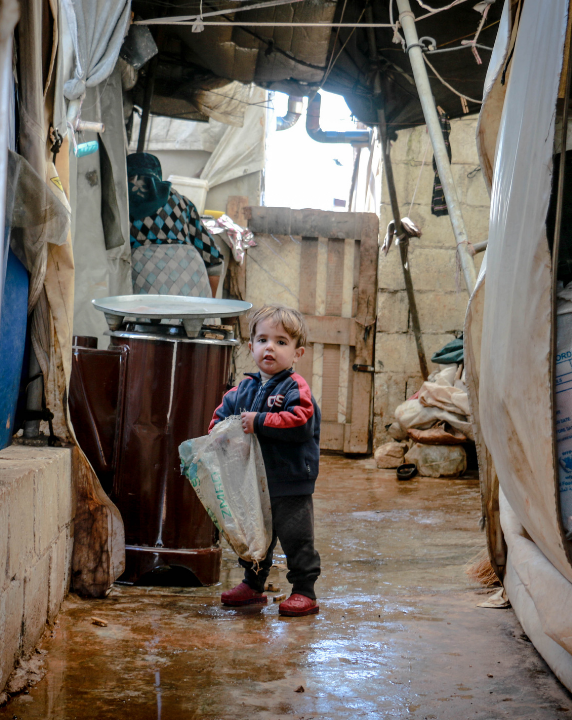
World Food Day: 645 Million People Experienced Hunger in 2025
16.10.2026
Reading time
less then minute
World Food Day is observed on 16 October. According to the United Nations (UN), more than 2 billion people worldwide cannot afford a healthy diet, leaving them vulnerable to various forms of malnutrition. In 2025, as many as 645 million people experienced hunger. “Nearly half of all child deaths worldwide are linked to malnutrition,” says Małgorzata Olasińska-Chart of the Polish Medical Mission (PMM).
I’m donating to…


World Food Day was established by the United Nations to highlight the urgent need to ensure that everyone has access to healthy, varied and nutritious food. This remains a major challenge: one in four people worldwide cannot afford a healthy diet, and as many as 645 million people experienced hunger in 2025.
“We face food crises in which war or natural disasters directly deprive people of access to food. But there are also situations in which food is available, yet some people simply cannot afford to buy it,” says Ewa Piekarska-Dymus, President of the Polish Medical Mission. “Malnutrition and hunger are directly linked to poverty. It is no coincidence that World Food Day and the International Day for the Eradication of Poverty fall so close together on the calendar.”
Hunger affects different regions of the world to varying degrees. Most people who experienced hunger in 2025 lived in Africa (309 million) and Asia (292 million). In Africa, the problem affected as many as one in five people.
The situation is particularly severe in countries affected by ongoing or recent armed conflicts, including Sudan, South Sudan, Somalia and Ethiopia. However, the climate crisis and widespread poverty also contribute to food insecurity. Children are especially vulnerable to the health consequences of hunger and malnutrition.
“Nearly half of all child deaths worldwide are linked to malnutrition. These are tragedies we can prevent. That is why, at the hospital in Wolisso, Ethiopia, we provide nutritional therapy for children suffering from severe acute malnutrition,” says Małgorzata Olasińska-Chart, Humanitarian Aid Director at the Polish Medical Mission.
“We also help treat malnourished patients in places such as Syria and the Gaza Strip. In these regions, malnutrition is primarily a consequence of prolonged conflicts, which have also led to the destruction of local agriculture and food production systems,” she adds.
Malnutrition has far-reaching health consequences. It weakens the body, increases susceptibility to disease and, in severe cases, can lead to death. In children, it can also impair normal growth and development.
The Polish Medical Mission continues to support people affected by hunger and malnutrition. Doctors working with the organisation provide treatment and nutritional support for children and other patients in countries and territories including Ethiopia, Senegal, Syria and the Gaza Strip.
Galeria
-
 1 / 7
1 / 7 -
 2 / 7
2 / 7 -
 3 / 7
3 / 7 -
 4 / 7
4 / 7 -
 5 / 7
5 / 7 -
 6 / 7
6 / 7 -
 7 / 7
7 / 7


Fight against hunger