World Humanitarian Day 2026: #ActForHumanity – Act for Humanity
19.08.2026
Reading time
less then minute
On 19 August, we mark World Humanitarian Day. This year’s campaign once again takes place under the hashtag #ActForHumanity. It is a call to draw attention to the situation of civilians living in conflict zones and humanitarian workers who provide assistance to them every day.
Humanitarian crises affect millions of people
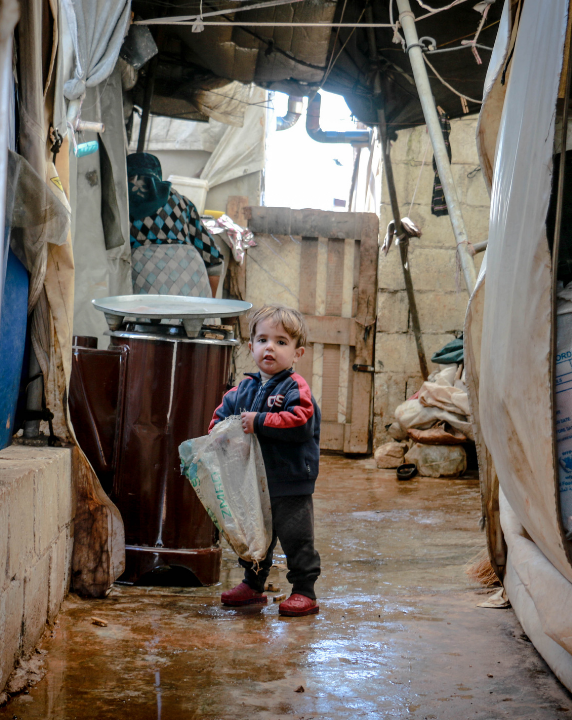
The scale of humanitarian needs around the world remains enormous. According to UN data, 252 million people need humanitarian assistance. Gaza, Ukraine, Sudan and Syria are just some of the places where people are facing the consequences of conflicts, political crises, disasters and climate change.
In recent months, Venezuela has also joined the list of countries affected by humanitarian crises. In addition to a political crisis that has lasted for years, the country has faced the consequences of a devastating earthquake.
“The situation varies greatly from one country to another. In Ukraine, we are facing a full-scale war. Syria is recovering from years of conflict, while Venezuela is suffering from a political crisis and the devastating consequences of an earthquake,” says Małgorzata Olasińska-Chart, Director of Humanitarian Aid at Polish Medical Mission. “There are also countries where the effects of war and the climate crisis overlap, such as Ethiopia. However, there is no doubt that armed conflicts are currently causing the greatest suffering. One could say that people have brought this fate upon other people.”
Civilians are dying, and so are humanitarian workers
The scale of violence in armed conflicts is particularly evident in the figures for 2025. More than 37,000 civilians were killed in armed conflicts, meaning that, on average, one civilian was killed every 14 minutes last year.
The work of humanitarian workers is also becoming increasingly dangerous. In 2025, at least 326 humanitarian workers lost their lives.
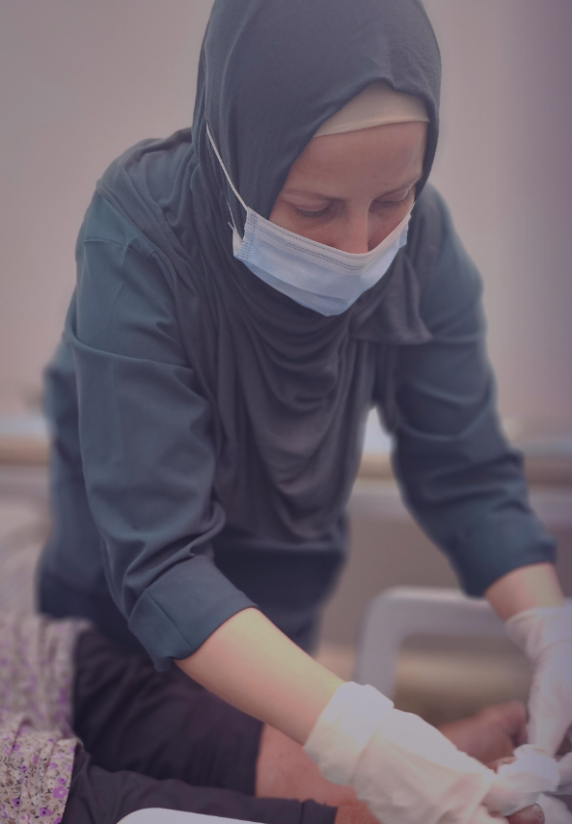
Among those facing danger every day are Ukrainian doctors working with Polish Medical Mission. Through mobile clinics, they provide medical care to patients living in frontline areas. The war affects them not only as medical professionals, but also as civilians living in a conflict zone themselves.
“Sumy comes under fire even several times a day. I am constantly worried about my children and myself. Life is also difficult because there is often no hot water, and sometimes there is not even cold water. It is difficult to refuel the car. We can only do it when there is no air raid alert, and those moments are rare,” says Julia Smiyanova, a doctor working with Polish Medical Mission’s mobile clinics. “How I cope with it, only God knows. Medication helps, as does the hope that everything will be alright.”
Humanitarian assistance is needed more than ever
Polish Medical Mission continues to provide assistance to people affected by humanitarian crises. The organisation operates in Ukraine, Gaza, Syria, Venezuela and the West Bank, providing medical assistance, supporting local healthcare facilities and reaching people with limited access to healthcare.
Behind every statistic about a humanitarian crisis, however, there is a person and their story.
“We often run large-scale aid projects, but at the end of the day, there is always another human being. There is Rania from Syria, whom we provided with a prosthetic leg and rehabilitation, enabling her to return to normal life. There is Andrij from Ukraine, whose dental treatment we were able to fund after Russian soldiers broke his jaw during torture. And there is Mohamed, who was able to begin effective treatment for throat cancer thanks to a visit from our mobile clinic,” says Ewa Piekarska-Dymus, President of Polish Medical Mission. “We will never be able to help everyone, but every one of these stories gives meaning to our work.”