Gaza Strip: Half of the hospitals are not operating
21.11.2025
Reading time
4 minutes
The ceasefire in the Gaza Strip has now been in place for over a month. The humanitarian situation remains difficult: only 18 out of 36 hospitals are functioning, and more than half of the essential medicines (including pediatric and oncology drugs) are completely unavailable. Despite the ceasefire, people continue to die: since October 10, at least 266 Palestinians have been killed.
The ceasefire in the Gaza Strip came into effect on October 10. In principle—aside from the exchange of hostages and prisoners—it was meant to allow unhindered access to humanitarian aid and prevent daily casualties among civilians. Unfortunately, both goals are being met, at best, only partially. Over the course of a month, 245 Palestinian women and men have been killed; assuming that, as before, civilians make up around 80% of the victims, a similar number of civilians are dying during the ceasefire in the Gaza Strip as in the full-scale war simultaneously taking place in Ukraine.
Access to humanitarian aid also remains severely limited. The peace agreement stated that around 600 trucks of aid should enter Gaza each day. At the moment, only between 100 and 150 enter daily. UN trucks and those of its partners still wait for days to be repacked and distributed within the Gaza Strip. As a result, key supplies such as medicines remain scarce: more than half of essential drugs (for example, pediatric and oncology medications) are completely unavailable in Gaza. Medical materials required for procedures and surgeries are also lacking.
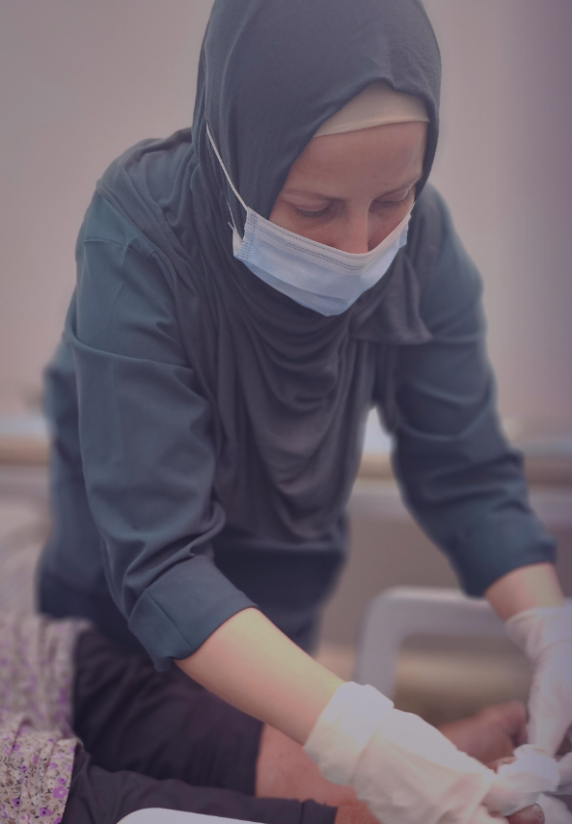
– Our doctors tell us that the situation at Al-Aqsa Hospital in Deir al-Balah is improving, but it is far from ideal. There is finally time for scheduled procedures, which were previously impossible due to the constant influx of people injured in shelling and bombings. There is more food now, but still not enough: a significant number of patients continue to suffer from malnutrition. This makes their treatment and physical recovery more difficult – comments Ewa Piekarska-Dymus from the Polish Medical Mission.
Access to medical care itself remains a problem: two-thirds of medical points, including half of the hospitals, are not operating. Nearly every second resident of the Gaza Strip is living in temporary camps for internally displaced people, due to both the widespread destruction of buildings and the so-called “yellow line.” The areas beyond this line are controlled by the Israeli army—amounting to 51% of the enclave’s territory.
– People in the Gaza Strip are living in harsh conditions, in overcrowded tents and buildings. Many of them lack access to clean water. It does not help that deliveries of water treatment and purification materials have been blocked in recent weeks – adds Ewa Piekarska-Dymus.
The Polish Medical Mission continues to support civilians in the Gaza Strip. Each month it sends a small medical team from Jordan to the hospital in Deir al-Balah: usually orthopedists, surgeons, anesthesiologists, or nurses. Each month, they perform around 150 surgeries and provide more than 1,000 medical consultations.