Gaza Strip Set Back by 77 Years. “It Is Now the Worst Place to Live in the World”
13.05.2026
Reading time
less then minute
The two-year armed conflict in the Gaza Strip has led to a catastrophic collapse in living conditions. According to a new report by the World Bank, the United Nations and the European Union, the region’s Human Development Index (HDI) has fallen to the lowest level ever recorded. Polish Medical Mission warns that the lack of medicines, clean water and functioning hospitals continues to cost lives every day.
I’m donating to…


Gaza Records the Lowest Human Development Index in History
According to a report on damage and losses in the Gaza Strip covering the period from October 2023 to October 2025, the region has been pushed back in development by 77 years. The report was prepared jointly by the World Bank, the United Nations and the European Union.
The Human Development Index (HDI), which measures life expectancy, education and income per capita, dropped to 0.339 — the lowest level since global HDI measurements began.
The total cost of physical destruction, economic losses and reconstruction needs has been estimated at more than 129 billion USD.
“The Gaza Strip Is Now the Worst Place to Live”
The sectors requiring the most urgent reconstruction are housing, agriculture and healthcare. According to Polish Medical Mission, the collapse of these sectors directly affects the daily survival of civilians.
When it comes to reconstruction, the three sectors with the greatest needs are housing, agriculture and healthcare. Their destruction has a direct impact on the catastrophic daily reality faced by Palestinians. Most people no longer have homes that are safe to live in, nutritious food is scarce, and more than half of medical facilities are no longer functioning. The Gaza Strip is now the worst place to live in the world – says Małgorzata Olasińska-Chart from Polish Medical Mission.
Ceasefire Has Not Ended the Humanitarian Crisis
The ceasefire in force since October 10, 2025, has not improved the humanitarian situation on the ground. According to humanitarian organizations, around 800 Palestinians have been killed over the past seven months despite the ceasefire.
Basic medicines and medical supplies remain unavailable, while more than half of healthcare facilities are still non-operational. Evacuations of critically ill patients in need of specialist treatment outside Gaza continue to be repeatedly suspended by Israel.
Our medical teams tell us about the absurdity of daily life there: it is easier to buy a box of candy bars than vegetables needed to prepare a nutritious meal. Extreme poverty is everywhere, and most families simply cannot afford basic products – says Ewa Piekarska-Dymus from Polish Medical Mission. – Malnutrition is only one part of the crisis. The lack of medicines, clean water and destroyed hospitals kills slowly and silently. We cannot look away.
Polish Medical Mission Continues Support for Civilians in Gaza
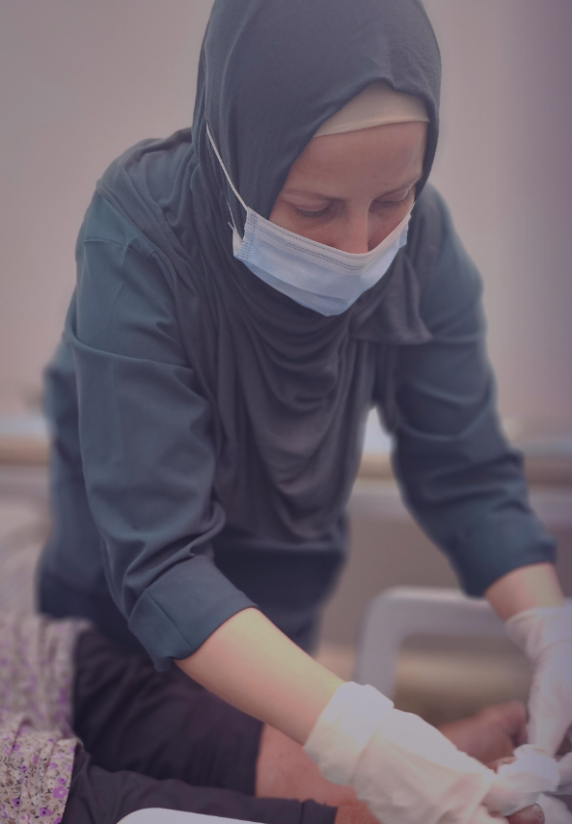
Polish Medical Mission continues its humanitarian activities for civilians in the Gaza Strip. In cooperation with its local partner GLIA, the organization co-finances a wound treatment clinic operating at Nasser Hospital in Khan Younis. The clinic opened on March 1 and remains one of the key medical support points in the Gaza Strip.